
| Developer | PIKPOK |
| Updated | Jul 31, 2026 |
| Size | 1.9 GB |
| Version | 1.86.1 |
| Requirements | 7.0 |
| Get it on |  |
Description
Into the Dead 2 drops you into a zombie-filled landscape with a weapon arsenal that ranges from combat knives to military explosives — and only your reaction speed stands between your family and the horde. This post is for beginners and returning players who want to survive more stages, spend upgrades wisely, and understand every mechanic the game offers. It covers combat controls, weapon and ammo perk upgrades, canine companions, zombie variants, story chapters, the multiple endings system, and the top mistakes that slow early-game progress.
What Into the Dead 2 Is and How It Play
Into the Dead 2 is a zombie survival auto-runner developed and published by PikPok. The original Into the Dead reached over 70 million downloads, and the sequel builds on that foundation with a complete narrative campaign. Players run through 60 stages across 7 chapters, face escalating zombie threats, and upgrade weapons that span firearms, melee tools, and explosives.
This is not a static shooter. The action never stops. Your character moves forward automatically, and your job is to steer, shoot, and slash through waves of the undead before they close in. The auto-runner survival format makes every stage a test of reaction speed and pre-run planning. However, the deeper weapon and companion systems are what separate the game from a simple arcade runner.
How the auto-runner zombie survival mechanic operates
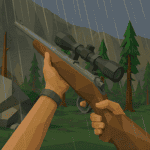
The core mechanic is forward momentum. Your character runs toward the zombie clusters ahead, and you control direction and combat output. Tilt controls or swipe gestures move the character left and right. Tap the screen to fire your equipped weapon. Zombies approach from the front, so hesitation depletes health fast.
PikPok designed the auto-runner system to create constant pressure on ammo management. Clusters get dense quickly in later stages, and switching to melee before your magazine fully empties is a critical habit to build early. Players who understand this rhythm from Stage 1 tend to survive significantly longer in Chapters 4 and beyond.
PikPok’s story premise and the race to save your family
The story positions your family at the centre of every decision. They are stranded somewhere ahead, and each chapter advances you toward them — or cuts off your path if you fail too many stages. However, the narrative does more than set a backdrop. Your cumulative stage performance influences which of the multiple endings you ultimately unlock.
The emotional stakes give this mobile runner more weight than most competitors in the genre. Seven full story chapters, each with distinct environments and rising zombie counts, create a sense of genuine progression. Additionally, five extra story events expand the world beyond the base campaign with licensed crossover content that no other mobile zombie runner offers.
How Into the Dead 2 compares to Dead Trigger 2 and Zombie Tsunami on mobile
Dead Trigger 2 by Madfinger Games is the most prominent competitor in the mobile zombie-shooter space. However, that game uses a stationary first-person combat model with base-building elements — a fundamentally different experience from the forward-momentum runner format here. Players who want constant movement and quick session play will find this game more satisfying than Dead Trigger 2’s slower, arena-style encounters.
Zombie Tsunami by Mobigame takes the opposite direction entirely. It is a lighthearted arcade experience where you control a zombie horde rather than survive one. By contrast, Into the Dead 2 maintains a serious survival-horror tone throughout all 7 chapters. Therefore, it occupies a distinct position in the mobile zombie genre that neither competitor fills.
How the Auto-Runner Controls and Combat Work
The control scheme is built for one-handed mobile play. Everything from dodging to firing runs through taps and swipe gestures, with no virtual joystick or complex button layout required. However, understanding the full range of combat options — not just shooting — is what separates players who progress cleanly from those who replay early stages repeatedly.
The game does not lock you into one combat style. Some stages put you at military gun emplacements. Others place you on top of a moving vehicle. Being ready to adapt your approach run to run is therefore essential to advancing through the campaign.
Swiping, dodging, and shooting as your character runs forward
Your character runs at a fixed pace toward the clusters ahead, and you steer using left and right swipe gestures. Tap the right side of the screen to fire your equipped firearm. The character maintains forward momentum automatically — you never manage movement speed, only direction and fire timing.
Reading zombie formations matters as much as reaction speed. Experienced players aim for the gaps between clusters rather than shooting through the densest groups. Consequently, preserving ammo this way becomes second nature by Chapter 3, where the gap between clean players and struggling ones becomes most visible.
Melee attacks, vehicle sections, and gun emplacement stages
When ammo runs dry, melee takes over. Tap the left side of the screen to strike with your equipped melee weapon. Timing these hits requires the zombie to enter close range first. However, a well-upgraded axe or knife can carry you through a dense cluster when your firearm magazine empties at the worst moment.
Vehicle and emplacement stages add variety to the runner format. During vehicle stages, you fire from a moving position while enemies approach from multiple angles. Military gun emplacement stages give you a mounted turret to hold a defensive line. Both stage types reward players who have invested in high-damage firearms and upgraded their primary ammo perks.
What happens when you clear a stage or chapter
Completing a stage awards in-game currency and sometimes a direct weapon unlock or upgrade token. The game tracks performance metrics per stage — faster completions and lower damage taken improve your score. As a result, revisiting earlier stages with better equipment is a reliable method for building upgrade resources before tackling harder chapters.
Chapter completion unlocks the next chapter and triggers a narrative cutscene. Additionally, clearing a chapter with a strong cumulative score contributes to the hidden performance rating that shapes which ending branch opens later in the campaign.
All Story Chapters, Stages, and Multiple Endings
The campaign structure is the backbone of replayability in Into the Dead 2. Seven chapters, 60 story stages, and hundreds of optional challenge stages give players far more content than most mobile runners deliver. Moreover, the multiple endings system means a second playthrough with better tactics can yield a different story outcome.
Understanding how the ending system works helps players make intentional decisions rather than stumbling into a result they did not expect. The chapter progression rewards completionists, but casual players can still reach the credits without clearing every optional challenge.
How the 7-chapter, 60-stage story structure progresses
Each chapter contains a sequence of story stages plus optional challenge stages. Story stages must be completed in order to advance the narrative. Challenge stages are optional but provide the highest per-run source of weapon upgrade tokens. Therefore, completing at least three challenges per chapter before moving forward accelerates progression significantly.
Difficulty increases with each new chapter. Chapter 1 introduces standard zombies in open environments with generous ammo drops. By Chapter 5, armoured zombies, running zombies, and environmental hazards combine to test every skill the game has built. Consequently, players who skipped challenge stages often feel underpowered at exactly this point in the campaign.
The Night of the Living Dead and Ghostbusters story events
The five additional story events are among the most distinctive features PikPok added to the sequel. The Night of the Living Dead event is a prequel to the classic film, placing players in recognisable settings with zombies that behave differently from those in the main campaign. The Ghostbusters expansion introduces a different visual aesthetic and enemy types tied to that franchise.
These events are not cosmetic additions. They offer exclusive weapons, companion unlocks, and prize rewards unavailable through the main stage reward pool. Furthermore, their difficulty regularly exceeds the base chapters, making them a meaningful challenge for players who have already completed the main story.
How your stage performance affects which ending you unlock
The multiple endings system is one of the most underexplored features in the game. Your cumulative performance across stages — accuracy, survival rate, and challenge completion percentage — contributes to a hidden campaign score. Players who complete stages with minimal damage and consistent challenge clears unlock more favourable story resolutions for their family.
This system creates real replay value. A second run with upgraded weapons and a more methodical approach to zombie clusters will often produce a different narrative outcome. Therefore, players who felt their first ending was unsatisfying have a concrete reason to replay specific chapters with efficiency as the primary focus.
Best Weapons, Ammo Perks, and Upgrade Options
Weapon selection before each stage is one of the highest-leverage decisions in the game. The wrong weapon type for a given environment can make a manageable stage feel impossible. However, a well-matched firearm paired with upgraded ammo perks turns the same stage into a comfortable clear.
The upgrade system applies to both the weapon and the perk attached to it. Upgrading perks changes total ammo capacity, shot-to-shot damage, and reload speed — and each perk type suits different enemy configurations and environment layouts.
Firearm types and how to unlock higher-tier weapons
Pistols unlock early and deal reliable damage against standard zombie clusters. Shotguns are powerful at close range but less efficient when clusters spread across a wide path. Assault rifles handle mid-range groups well and become available from Chapter 2 onward. Military-grade weapons — including miniguns and grenade launchers — are the most powerful options and unlock through late-chapter progress or exclusive story event completions.
Unlocking higher-tier firearms requires completing specific stage challenges or accumulating enough in-game currency on the weapon selection screen. Additionally, some weapons are exclusive to story events and cannot be unlocked through the main campaign alone — making event participation worthwhile for players who want the full arsenal.
Melee weapons and explosives for close-range zombie combat
Melee weapons fill a critical role when firearm ammo depletes mid-run. Knives deal fast but lower damage per hit. Axes strike harder but slower, creating a window of vulnerability between swings. The machete offers a reliable middle ground and performs consistently across the mid-game’s varied zombie configurations. Equipping a strong melee weapon before entering high-density stages reduces the risk of being overwhelmed when the magazine empties at the worst moment.
Explosives — including grenades and molotov cocktails — deal area damage and work best against grouped zombie clusters. However, they carry limited charges per run. Therefore, saving explosive charges for armoured zombie packs rather than using them on standard clusters is consistently the better tactical choice.
How ammo perks change your survival odds each run
Ammo perks attach to a specific weapon and modify how it performs during a run. A capacity perk increases total ammo carried into the stage. A damage perk increases stopping power per shot. A reload perk speeds the transition between magazine changes. Each perk type suits a different stage scenario. Consequently, matching the right perk to the right environment before each run is the habit that separates mid-level players from consistent high-scorers.
Upgrading perks costs in-game currency earned through stage and challenge completions. The damage perk upgrade pays off fastest because it reduces the total shots needed per zombie, which stretches each ammo supply further through longer stages.
All Zombie Variants and Environments You Will Face
The zombie roster expands steadily as chapters progress. Standard zombies feel manageable by the time armoured variants enter the mix in Chapter 3. However, the running zombie type shifts the difficulty curve more sharply than any other enemy type — requiring faster aim and pre-positioned movement to handle safely.
The environment range is equally varied, spanning open farmland, industrial zones, and high-altitude terrain. Each setting changes zombie cluster density, obstacle layout, and the safe running paths available to the player.
Standard versus armoured and running zombie behaviours
Standard zombies move at a predictable walking pace and go down in one to two shots from a mid-tier firearm. Armoured zombies absorb significantly more damage, requiring sustained automatic fire or a precise melee strike to a weakly protected area. However, the running zombie is the most dangerous of the three. They close distance in under two seconds and punish any delay in directional response.
Players who misread running zombie clusters tend to empty their firearm magazine before clearing the group. Therefore, switching to melee when a running cluster enters close range — rather than spending final shots on a closing target — keeps the run alive longer and preserves ammo for the cluster that follows.
The range of environments from oil fields to frozen mountain peaks
The main campaign moves players through oil fields, military bases, rural farm communities, and campsites. The five additional story events add burning forests and frozen mountain tops to the location list. Each environment affects lighting conditions, obstacle density, and the typical formation of zombie clusters.
Oil field stages feature wide running corridors with predictable zombie groupings. Military base stages introduce narrower paths and more obstacles. Frozen mountain stages combine low visibility with running zombie variants — making them the most demanding environments in the entire game in terms of reaction speed required.
How environmental hazards shape your route decisions
Every environment contains static obstacles — barrels, fencing, vehicle wreckage — that force detours and limit dodge options. However, these hazards also create natural bottlenecks where zombie clusters concentrate. Experienced players identify the gap at the edge of each bottleneck and steer toward it rather than pushing through the centre.
In burning forest stages, falling debris adds a moving hazard layer on top of zombie threats. Consequently, players need to track both debris trajectories and zombie positions simultaneously during these stages. This dual-layer pressure makes the burning forest sections among the most skill-intensive in the full campaign.
How Canine Companions and Special Event Modes Work
The canine companion system is one of the most impactful features in Into the Dead 2 and consistently one of the least understood. Dogs assigned to your loadout actively attack nearby zombies during a run, providing a buffer that prevents hits in dense clusters when your character cannot dodge fast enough. However, the companion system only delivers its full value when players invest in upgrading the dogs alongside their weapons.
Daily and special event modes add a separate layer of content on top of the main campaign. These modes refresh regularly and offer exclusive prizes — weapons and companions unavailable through the standard stage reward pool.
What canine companions do and how to upgrade them
Each canine companion has a specific attack range and activation trigger. Some dogs lunge at zombies entering close range. Others target armoured zombies over standard ones. Upgrading a companion increases attack frequency and effective range, making it progressively more useful in high-density stages.
Matching the right companion type to the stage environment matters as much as weapon selection. A companion optimised for close-range burst attacks performs better in tight military base corridors than one designed for wide-field engagement. Therefore, reviewing the companion loadout before each run — not just the weapon — is a habit worth building from the start of Chapter 2 onward.
Daily events and what special event prizes are worth earning
Daily events refresh every 24 hours and test a specific constraint — surviving without using melee, clearing a stage with a restricted weapon class, or completing a run without taking a hit. The prizes scale with completion difficulty. High-performance completions yield exclusive ammo perks and rare companion upgrade materials unavailable elsewhere.
Special events, including the Night of the Living Dead and Ghostbusters expansions, are time-limited and offer the most valuable prizes in the game. Prioritising these events during their active window is worthwhile for any player committed to building a strong weapon and companion collection.
How offline mode keeps the game playable anywhere
Into the Dead 2 supports full offline play for its story mode. No internet connection is needed to progress through chapters, complete challenge stages, or upgrade weapons and companions. This makes it one of the more accessible mobile zombie runners for players who commute, travel, or lack reliable mobile data.
The offline capability extends to standard daily mode as well. However, some special event modes and competitive leaderboard features require a live connection. Therefore, players planning extended offline sessions should complete active daily event runs before going offline to avoid missing time-sensitive reward windows.
Top Beginner Mistakes That Cost Players Progress
Most early-game failures in Into the Dead 2 follow the same three patterns. Players neglect the upgrade system, misread specific enemy behaviours, or carry the wrong loadout into a new chapter. Each mistake compounds over time, making later chapters feel disproportionately difficult when the real issue is an underdeveloped resource base.
Catching these patterns early allows course correction before significant currency is spent inefficiently. However, fixing them requires understanding how the weapon, perk, and companion systems interact — not simply playing more stages.
Skipping ammo perk upgrades before harder chapters
New players typically funnel all currency into unlocking new weapons while leaving perk upgrades untouched. This approach works through the first two chapters, where zombie density stays manageable on stock ammo capacity. However, from Chapter 3 onward, armoured zombie counts rise sharply, and unupgraded ammo becomes the primary bottleneck.
Upgrading the capacity and damage perks for your primary firearm before advancing to Chapter 3 is the single most impactful resource decision in the early game. Players who do this consistently run farther, take fewer forced-melee situations, and enter Chapter 4 with a significant survival advantage over those who prioritised weapon variety instead.
Misreading armoured zombie movement in later stages
Armoured zombies do not behave like standard ones. They approach from oblique angles rather than directly head-on, and their armour absorbs centre-mass fire efficiently. Beginners waste ammo shooting at the armoured front of these enemies, which drains the magazine and forces a melee exchange the player is rarely prepared for.
Adjusting your running path to approach armoured zombies from a lateral angle exposes their unprotected areas to fire. Additionally, a well-timed melee strike — rather than a sustained burst — clears armoured enemies faster and preserves firearm ammo for the running zombie clusters that almost always follow in the same stage section.
Ignoring canine companion upgrades in the early game
The canine companion feels optional during Chapter 1. Standard zombie density is low, and even a base-level dog clears nearby threats without issue. However, this low-pressure period is the best time to invest companion upgrade currency because the cost per level is lowest at lower tiers.
Players who begin upgrading companions seriously only after Chapter 3 — when the system becomes visibly necessary — pay significantly more currency per upgrade level to reach the same effectiveness. Therefore, allocating a portion of each chapter’s reward currency to companion upgrades from Stage 1 onward reduces the difficulty spike in the mid-game considerably and without any extra grinding.
Best Into the Dead 2 Tips and Tricks for Beginners
The most effective Into the Dead 2 tips are specific to mechanics unique to this game — the weapon loadout screen, the chapter challenge system, and the zombie spawn reading skill each offer concrete performance gains before a single run begins. These are not general survival principles repackaged from other zombie games. They are actions tied directly to systems PikPok built specifically into this title.
Applying these consistently across the first three chapters establishes a trajectory that makes the rest of the campaign manageable. Moreover, none of these approaches require any real-money spending — all are achievable through the base progression systems.
Matching stage-specific weapons to each environment before every run
Each stage type rewards a different weapon category. Open-field stages with wide zombie clusters suit assault rifles — the spread of fire connects across multiple targets per burst. Narrow corridor stages in military bases work better with shotguns, which clear tight zombie formations in fewer shots and with less ammo consumption. Frozen mountain stages, with their fast-moving running zombie clusters, demand a high-rate-of-fire weapon to compensate for the shortened reaction window.
The stage selection screen shows a preview thumbnail before you confirm your loadout. Use it. Players who ignore the preview and carry the previous stage’s weapon into a new environment type regularly find themselves ill-equipped after the first cluster — and there is no opportunity to swap mid-run.
Using chapter challenge completions to farm weapon upgrades faster
Each chapter contains optional challenges — survive a stage without using melee, complete a stage without taking damage, or reach the end under a target time. These challenges yield the highest per-run currency reward in the game. Additionally, completing all challenges in a chapter before advancing to the next unlocks a bonus reward package containing upgrade tokens.
Running challenge stages specifically with the weapon you intend to upgrade — rather than your strongest weapon — also forces deeper engagement with that weapon’s mechanics. This pays off later in the campaign when that weapon becomes your primary option and you have already learned its range, reload timing, and optimal cluster range.
Reading zombie spawn formations to pick the safest running path
Every stage generates zombie clusters in semi-predictable formations. The screen reveals upcoming zombie positions a few frames before your character reaches them. This brief preview is enough to make a directional choice. Players who react to zombies as they arrive — rather than reading the path ahead — spend more time dodging than shooting, which depletes health faster and wastes ammo.
The safest running path is almost always the widest gap between two zombie clusters, not the edge of the screen. Steering toward a side wall limits future dodge options and often leads directly into the next cluster. Positioning in the centre-to-right of a gap gives the most reactive space for whatever formation appears next.
What Players Most Often Ask About Into the Dead 2
Is Into the Dead 2 free to play on Android and iOS?
Into the Dead 2 is free to play on both Android and iOS. PikPok provides the full story mode — all 7 chapters and 60 stages — at no cost. Players can purchase certain in-game items, including specific weapons and perks, with real money. However, the game’s core campaign progression does not require any spending to complete from start to finish.
How many chapters and stages does Into the Dead 2 have?
Into the Dead 2 contains 7 main story chapters and 60 stages in the primary campaign, plus hundreds of optional challenge stages. Five additional story events — including a Night of the Living Dead prequel and a Ghostbusters expansion — add substantial content beyond the base campaign. Daily and special event modes also refresh regularly, providing new stages on an ongoing basis.
Does Into the Dead 2 have multiple endings?
Yes, Into the Dead 2 features multiple endings determined by overall campaign performance. Accuracy, survival rate, and challenge completion rate across stages contribute to a hidden score that shapes the narrative outcome. Players can replay chapters with upgraded weapons and more efficient tactics to reach different endings, which gives the campaign meaningful replay value beyond a single run-through.
Why Into the Dead 2 Stands Out Among Zombie Runners
Into the Dead 2 succeeds where most mobile zombie games fall short — it combines arcade-level accessibility with genuine strategic depth. The weapon upgrade system, canine companion mechanics, and multiple endings give players real reasons to return after the credits roll. Moreover, the licensed crossover events with Night of the Living Dead and Ghostbusters deliver content that no competitor in the mobile runner genre comes close to replicating.
Who this game suits among zombie survival fans
This game suits players who want a mobile zombie experience that supports both casual and committed play styles. Beginners can progress through Chapter 1 without any prior genre knowledge. Meanwhile, players who commit to the upgrade systems, challenge completions, and companion loadout optimisation get a significantly richer experience than the surface-level runner format suggests. The offline capability also makes it a strong option for players with unreliable data connections.
The one feature that separates it from every competitor
The canine companion system is the feature no other mobile zombie runner has replicated at the same depth. A well-upgraded companion does not simply provide a combat buffer — it changes the tactical calculation for every stage entered. Choosing the right companion type for the right environment is a skill as meaningful as weapon selection. That layer of strategy is what keeps individual runs feeling distinct run after run.
Our honest verdict after completing all 7 chapters
After completing all 7 chapters and the Night of the Living Dead event, Into the Dead 2 earns its place as the strongest narrative zombie runner currently available on mobile. The multiple endings system rewards effort in a way most free-to-play mobile games never bother to implement. The licensed crossover events deliver premium content without requiring a premium purchase. This is the zombie runner to start with — and the one most players are still returning to months after their first run.
Images


Download links
What's new
Performance improvements and bug fixes:
Updated internal systems to improve stability.
Fixed a startup crash affecting low-end iOS devices.
Improved Android warm start performance.
Fixed issues, including game audio, after watching interstitial ads.




Latest Games
Popular Games


