
| Developer | VNGGames Studios |
| Updated | Jul 31, 2026 |
| Size | 92 MB |
| Version | 4.178.2 |
| Requirements | 6.0 |
| Get it on |  |
Description
Dead Target: Zombie Games 3D sets itself apart from other mobile FPS titles by letting players battle endless zombie waves entirely offline, using an auto-fire system and an arsenal of over 50 upgradeable 3D weapons set in a 2040 post-war apocalypse. This post is written for beginners and returning players who want to get more from the rank system, weapon upgrades, and battle modes before spending their hard-earned Gold. Below, this post covers the core shooting mechanics, all major game modes, the weapon customisation system, the Battle Pass, rank and achievement progression, hidden gameplay tips, and the most common mistakes that new players make.
What Is Dead Target and How Does the FPS System Work
Dead Target is a free-to-play 3D first-person shooter developed and published by VNGGames Studios. Players defend against non-stop zombie waves in an offline environment. The game has surpassed 200 million downloads across Android and iOS, making it one of the most-installed mobile FPS titles in the genre.
The core loop is simple but deep. Players take position, use the auto-fire system to shoot incoming zombies, collect in-game currency, and spend it on weapon upgrades between missions. Each mission places the player at a fixed point, requiring fast reactions and precise aiming rather than exploration. This design makes the game easy to pick up and hard to put down.
The Freemium monetisation model means the full campaign is playable without spending real money. However, premium items such as limited Battle Pass guns and Red Diamond purchases offer cosmetic and power advantages. Players who understand the currency system — Cash, Gold, and Red Diamonds — progress significantly faster than those who spend without strategy.
What the Auto-Fire Mechanic Is and How It Changes Combat
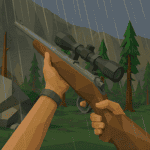
The auto-fire system is the single most important mechanic to understand. When a zombie enters your crosshair zone, the game fires automatically. Players do not need to tap a fire button. Instead, they control where the weapon aims by dragging the screen left or right, up or down.
This system removes one barrier to entry. However, it also means that accurate headshots require deliberate crosshair placement rather than fast tapping. Players who aim consistently at head level deal more damage per shot and collect more Cash per kill. Sloppy aiming still clears waves, but it wastes ammunition and slows Gold accumulation significantly.
What the 2040 Zombie Apocalypse Story Premise Covers
The story is set in 2040, after World War III ends with biological weapon use on a massive scale. The CS Corporation launched Project Dead Target to transform prisoners into super-powered combat units. When the corporation broke its agreement with the government, the experiment spiralled out of control and zombies flooded the city streets.
Players join a hired sniper squad sent to the frontlines to protect surviving residents and push back the undead threat. The narrative unfolds across campaign missions, with each zone — from oil fields to military bases — adding environmental context to the ongoing survival war. Boss enemy ROCKY is the first major story checkpoint players face.
How Dead Target Compares to Into the Dead 2 and Dead Trigger 2 on Mobile
Dead Target, Into the Dead 2, and Dead Trigger 2 are the three dominant offline zombie FPS titles on Android and iOS. Each takes a different structural approach. Into the Dead 2 focuses on an endless-runner format where players move forward through zombie hordes and must dodge as well as shoot. Dead Trigger 2 adds base-building and a wider open-environment mission structure.
Dead Target, by contrast, locks the player in a fixed defensive position for each wave. This makes it the most accessible of the three. Additionally, the auto-fire system removes the tap-to-shoot requirement entirely. Players who prefer reaction-based aiming over movement strategy find Dead Target more immediately rewarding. However, Dead Trigger 2 offers more mechanical depth for players willing to invest more time.
How Dead Target Gameplay Mechanics and Controls Work
Controls in this offline FPS are optimised for one-hand or two-hand mobile play. The left side of the screen handles movement of the crosshair vertically. The right side handles horizontal sweep. Players swipe to aim, and the auto-fire system handles the rest. This layout means the game works well on small screens and during commutes.
Grenades sit in the upper corner of the HUD. Players tap to throw them at clustered zombie groups. First-aid kits appear mid-mission to restore health after zombie attacks. Timing these items matters more in later missions, where zombie attack speeds increase sharply. Players who burn first-aid kits early in a wave often find themselves without recovery options when boss variants appear.
The difficulty curve is moderate in the early campaign. However, it sharpens significantly after Mission 9, when boss ROCKY is defeated and Apocalypse mode and Gun Trial mode unlock. Players who understand the core controls before reaching these modes avoid most of the frustration that negative reviews describe.
How the Auto-Fire System Handles Shooting and Targeting
As explained in the game overview, the auto-fire system fires whenever a zombie enters the active crosshair zone. Players cannot disable this system. Therefore, skilled play is about crosshair discipline. Keeping the sight at head level at all times triggers headshot bonuses more consistently.
The system also means that fast zombie types — which move unpredictably — require more active crosshair tracking. Slower zombie types allow players to hold position and let auto-fire clear them. Knowing which zombie type to track versus which to hold on determines how efficiently players use their weapon’s magazine between reloads.
How the Zoom, Aim, and Grenade Controls Work in Combat
The sniper zoom function activates by tapping the scope icon on the right side of the HUD. Zooming increases accuracy for single distant targets but narrows the field of view. This is useful for boss encounters but risky during wave rushes, where peripheral zombies can flank quickly.
Grenades are best used when three or more zombies cluster in the same screen zone. One grenade thrown into a cluster eliminates multiple enemies at once and prevents them from reaching the player simultaneously. Players who throw grenades at single targets waste a limited resource. Grenade count resets between missions, so there is no reason to save them across levels.
What Happens When a Mission Wave Is Completed or Failed
Completing a mission wave awards Cash and, for specific missions, Gold. The exact reward amount depends on kill count, headshot percentage, and mission difficulty tier. Players who achieve high headshot rates consistently earn more Cash per mission, which then funds faster weapon upgrades.
Failing a wave — by running out of health — returns the player to the mission start. No permanent currency penalty applies for failure. However, time spent grinding failed missions is lost progression. Players who upgrade their current weapon before attempting a harder wave win significantly more often than those who push ahead with underlevelled gear.
How the Dead Target Arsenal and Weapon Customisation Works
The weapon system is one of the deepest parts of this offline shooter. Over 50 weapons span multiple categories: pistols, shotguns, assault rifles, sniper rifles, and submachine guns. Each weapon has individual stats for damage, fire rate, magazine size, and reload speed. Players unlock new weapons by reaching specific rank thresholds or by purchasing them with Gold.
Weapons become substantially more powerful through the upgrade system. Each upgrade level increases the weapon’s damage output directly. Higher upgrade tiers require more Cash per level but also deliver proportionally larger damage multipliers. Players who invest in fully upgrading one weapon outperform those who spread Cash across multiple partially-upgraded guns.
Skin customisation adds visual variety but does not affect weapon statistics. Skins are earned through Battle Pass events or purchased with Red Diamonds. For players focused purely on performance, skins are optional. However, rare event skins carry prestige on the competitive leaderboard and motivate continued play for many users.
Which Weapon Types Are Available Across the 50-Gun Arsenal
Sniper rifles are the highest-damage single-shot option. They deal strong headshot multipliers and work well against slow-moving or boss-type zombies. Shotguns clear close-range clusters fastest but become unreliable at medium and long distances. Assault rifles balance fire rate and damage, making them the most broadly useful weapon type across all mission types.
Submachine guns offer the fastest fire rate but the lowest per-shot damage. They suit fast-moving zombie types where volume of fire matters more than precision. Pistols serve as starter weapons and are quickly outclassed. Players who transition from pistols to assault rifles or snipers at the earliest opportunity see a clear improvement in their mission clear rates.
How to Upgrade and Customise Guns with Skins
Weapon upgrades require Cash and are accessed through the Arsenal menu between missions. Each upgrade costs progressively more Cash. The first five upgrade levels are affordable in the early game. However, levels six through ten require careful Cash management. Players should complete daily quests and achieve high headshot rates specifically to fund these upper-tier upgrades.
Skin application is separate from upgrades. After purchasing or earning a skin, players open the specific weapon card and apply it from the skin inventory. Skins do not replace the weapon’s base stats. Multiple skins can be collected for a single weapon, but only one is active at a time.
How Gold, Cash, and Red Diamond Currency Fund Weapon Purchases
Cash is the standard currency, earned through mission completion and quest rewards. Gold is the premium tier, earned more slowly through achievements and quests or purchased with real money. Red Diamonds are the top-tier currency, used for mythic and legendary weapons and skins. Players should prioritise Cash for upgrades and use Gold only for weapons that are genuinely inaccessible through Cash.
Spending Gold on Casino lucky wheel spins can yield bonus items and rare weapon parts. However, the outcome is random. Players who spend Gold exclusively on direct weapon purchases get more consistent value than those who rely on the Casino for progression.
How Dead Target Game Modes Differ: Campaign, Apocalypse, and Gun Trial
The main campaign is the foundation of the entire game. It consists of sequential numbered missions, each set in a specific zone such as oil fields, military bases, or frontier outposts. Players clear each mission by eliminating all zombie waves before health reaches zero. Clearing missions awards Cash and, at key milestones, Gold and new weapon unlocks.
Beyond the campaign, two additional modes open up after key milestones. Apocalypse mode activates after defeating boss ROCKY in Mission 9. Gun Trial mode also unlocks at this same point. Both modes offer harder challenges and better rewards than standard campaign stages. Players who ignore these modes miss a significant source of Gold and rare weapons.
Side missions provide the third layer. They become available after completing Mission 22 and function as supplementary earn opportunities. Side missions are shorter and more targeted. They allow players to grind Cash quickly without replaying the same campaign stages repeatedly.
How the Campaign Mission System Progresses and Unlocks
Each campaign mission builds on the previous one in zombie difficulty and wave count. Early missions feature slow-moving standard zombie types. Later missions introduce fast movers, armoured variants, and boss zombies with named special abilities. Players rank up by completing missions, which then unlocks the next stage and associated weapon tiers.
Mission zones change the environmental setting and zombie placement patterns. Oil field missions keep enemies at medium range. Military base missions compress the combat distance, requiring faster crosshair response. Frontier missions mix both. Understanding the zone type before starting helps players choose the right weapon class.
What Apocalypse Mode and Gun Trial Mode Demand from Players
Apocalypse mode removes the structured wave format. Instead, zombies attack continuously and in far greater numbers. There is no clear endpoint — the mode tests how long players can survive. Rewards scale with survival time and total kill count. Players need a fully upgraded weapon at minimum before attempting Apocalypse, because standard damage output runs out before the zombie count does.
Gun Trial mode is different. It assigns players a specific weapon for each trial and measures performance using that weapon only. This forces players to understand weapon classes beyond their preferred loadout. Completing Gun Trial challenges rewards weapon modules, which are upgrade components used specifically for weapon promotion beyond the base upgrade levels.
What the Side Mission System Unlocks After Mission 22
Side missions become available after Mission 22 and are consistently the fastest Cash-earning method in the game. Each side mission focuses on a specific objective — for example, eliminating a set number of a specific zombie type within a time limit. These are shorter than campaign missions and repeat on a daily cycle.
Players who complete all available side missions each day generate enough Cash to fund one to two weapon upgrade levels per session. Therefore, the Side Mission system is the most efficient daily loop for players who want to upgrade weapons without spending real money. Skipping it is the single largest source of slow progression in this title.
How the Dead Target Rank and Achievement System Rewards Players
The rank system ties directly to the quest system. Every quest completed awards experience points that advance the player’s rank. Higher ranks unlock new weapon tiers, new mission zones, and access to special weapon modules. Rank is therefore the primary gate on all progression. Players who ignore quests and focus only on replaying missions rank up far more slowly.
Achievements are separate from quests but feed into the same reward economy. Each achievement has a specific trigger condition — for example, achieving 100 headshots or completing a mission without taking damage. Achievements award Gold and Cash on completion. Some rare achievements, described in-game as the best-paid, award large Gold payouts that fund multiple weapon upgrades.
The competitive leaderboard tracks total kill count globally. Players compete for ranking positions by accumulating the highest zombie kill totals. Leaderboard standing does not directly affect weapon unlocks, but it motivates continued play and signals achievement status within the community.
How Quest Completion Drives Rank Progression
Quests fall into two categories: daily quests and milestone quests. Daily quests reset every 24 hours and require specific actions within that window — for example, completing three missions using a shotgun or landing 50 headshots in one session. Milestone quests are permanent objectives that track cumulative progress over time.
Daily quests are the most efficient rank driver. Completing all available daily quests consistently is the fastest way to move through rank tiers. Players who log in specifically to clear daily quests before anything else maximise their experience gain per session.
What Achievements Exist and Which Ones Pay the Most Gold
The achievement list spans dozens of categories, covering headshots, mission clears, weapon upgrades, kill streaks, and mode completions. The highest-paying achievements require sustained effort across multiple sessions. Rare achievements — those with unusual or specific trigger conditions — consistently offer the largest Gold rewards.
For example, completing a mission in Apocalypse mode at high difficulty without using a first-aid kit triggers a rare achievement category with significantly above-average Gold payout. Players who actively hunt these conditions rather than waiting for them to occur naturally collect Gold two to three times faster than passive players.
How the Competitive Leaderboard Tracks Kill Count Progress
The leaderboard ranks all active players by total zombie kill count. It resets on a set cycle, giving new players a genuine opportunity to reach top positions during each period. Kill counts from all modes — campaign, Apocalypse, and Side missions — contribute to the total.
Players who run Apocalypse mode specifically for leaderboard ranking accumulate kills faster than those who replay campaign missions. Apocalypse mode’s continuous enemy stream means kill totals climb faster per minute of play. Consequently, players who combine daily quest completion with Apocalypse mode sessions rank faster across both the progression system and the leaderboard simultaneously.
How the Battle Pass and Limited Event Items Work in Dead Target
The Battle Pass is Dead Target’s seasonal content system. It runs for a fixed time window and offers exclusive weapons, skins, and survival items that cannot be obtained through standard campaign play. Each pass has a tier structure. Players advance through tiers by completing specific in-game actions during the event window.
Event guns released through the Battle Pass are often among the highest-stat weapons in the game at the time of their release. Because they disappear when the event ends, players who miss an active pass permanently lose access to that specific weapon variant. This makes each Battle Pass cycle a meaningful decision for players invested in building the strongest possible arsenal.
The Battle Pass also introduces narrative-themed events, such as the Athena event and the Frankenstein Event, which add limited zombie skins, zone environments, and mission challenges. These events keep the content cycle fresh between major game updates.
What the Battle Pass Offers That Standard Play Does Not
The standard game offers Cash-purchasable weapons and Gold-tier weapons through quests and achievements. The Battle Pass offers a third category entirely: event-exclusive weapons that exist only for that season. These weapons often carry higher base damage stats or unique firing mechanics not available in the standard arsenal.
Additionally, the Battle Pass provides survival items — aid kits, special grenades, and power-up consumables — in quantities that standard play cannot match. For players who want to push through higher Apocalypse difficulty tiers, the consumable advantage from the Battle Pass is as important as the weapon advantage.
How to Collect Special Guns That Appear Only During Events
Event guns are tied to reaching specific Battle Pass tiers within the event window. Players advance tiers by completing event-specific missions and daily challenges. The further a player progresses through the tier structure, the higher-rarity the weapon reward becomes.
Players who join the Battle Pass early in its cycle and complete two to three event missions per day consistently reach the top-tier weapon rewards before the event closes. Players who join late and attempt to catch up in the final days often fall short of the highest-tier reward. The most valuable event weapons require eight to twelve days of consistent daily play to unlock.
How the Casino Lucky Wheel Rewards Players Between Missions
The Casino lucky wheel is an in-game mini-feature that awards random rewards between missions or during event periods. Players spin the wheel using Gold or specific spin tokens earned through quests. Possible rewards include Cash bundles, weapon upgrade parts, aid kits, and rare weapon components.
The outcome is random and not guaranteed. Players should treat the Casino as a bonus opportunity rather than a reliable progression tool. Spending Gold on direct weapon upgrades or purchases is consistently more efficient than Casino spins for most progression goals. However, for players with surplus Gold at the end of a session, a spin offers a low-stakes chance at a rare component.
Best Dead Target Tips and Tricks for Beginners
Beginners in this 3D offline FPS most commonly struggle with three things: spending Cash on the wrong weapons early, underusing the quest system, and misreading the auto-fire system as a passive mechanic. Addressing all three of these directly makes a significant difference to early-game progression speed.
The first principle is patience. New players often spread Cash across multiple weapons before fully upgrading a single one. A single weapon at upgrade level eight outperforms three weapons at level three in almost every mission scenario. Building depth before breadth is the most effective early-game strategy.
The second principle is daily login consistency. The rank and quest system rewards players who complete daily quests every day more than it rewards players who play for long sessions occasionally. Fifteen minutes of targeted daily quest completion advances rank faster than a two-hour grinding session that ignores the quest log.
How to Use the Auto-Fire System to Maximise Headshot Accuracy in Dead Target
The auto-fire system fires on its own, but headshot bonuses only trigger when the crosshair sits at head level before auto-fire activates. Therefore, the correct technique is to sweep the crosshair to head height as each new zombie enters range, then hold that height while auto-fire handles the rest.
Players who let the crosshair drift to body or leg level still kill zombies, but they miss the headshot Cash multiplier on every kill. Over a full campaign mission, this difference in Cash earned is substantial. Specifically, players who maintain consistent head-level aiming earn enough extra Cash to fund one additional upgrade level per three to four missions compared to players who aim carelessly.
How to Prioritise Quest Completion to Rank Up Faster in Dead Target
The quest log updates daily and contains three to five objectives at any given time. Before starting any mission session, players should open the quest log and identify which quests are closest to completion. Then, choose the mission type and weapon class that most efficiently satisfies those conditions.
For example, if a quest requires 30 shotgun kills, equip a shotgun for the next two missions rather than the default primary weapon. This approach completes quest objectives within normal play time without requiring extra sessions. Consequently, players who align weapon choice with active quest conditions rank up 40 to 60 percent faster than those who play without checking the quest log.
How to Avoid the Most Common Cash-Wasting Mistake New Players Make
The most common mistake new players make is purchasing a new weapon type before fully upgrading their current primary weapon. Each weapon purchase in the Arsenal costs Cash that could instead fund two to three upgrade levels on an existing gun. A fully upgraded starter rifle consistently outperforms a freshly purchased higher-tier rifle at level one.
The second most common mistake is spending Gold on Casino lucky wheel spins before owning a fully upgraded weapon. Gold is rare and slow to accumulate. Spending it on random Casino outcomes before securing weapon depth leaves players under-equipped for Apocalypse mode and Gun Trial challenges. Save Gold for targeted weapon and achievement purchases first.
Frequently Asked Questions About Dead Target
Is Dead Target free and available on Android and iOS?
Dead Target is completely free to download on both Android via Google Play and iOS via the App Store. The base campaign, all standard weapons, and core game modes require no payment. In-app purchases exist for Gold, Red Diamonds, and Battle Pass access, but none of these are required to progress through the main campaign or reach high rank levels.
How hard does Dead Target get as you progress through missions?
Dead Target increases in difficulty noticeably after Mission 9, when boss ROCKY appears and new modes unlock. Zombie types become faster, more armoured, and harder to stagger in later campaign zones. Multiple player reviews confirm the difficulty spike is significant, so upgrading your primary weapon fully before advancing past Mission 9 is strongly recommended.
Does Dead Target get new content and how often does it update?
Dead Target receives regular updates from VNGGames Studios, typically introducing new Battle Pass events, new skills such as Counter Stealth and Solaris, new zombie skins, and zone expansions. The Apple App Store changelog confirms multiple updates in 2025 and 2026, including new spin event improvements, new Boss weak-point systems, and new weapon model additions for guns like the AS50.
Why Dead Target Is One of the Best Offline FPS Games on Mobile
Dead Target earns its place among the top mobile zombie shooters because it delivers a genuinely complete experience without requiring an internet connection. The auto-fire system removes the skill floor barrier, making it accessible to new players. However, the weapon upgrade depth, rank system, and multi-mode structure add enough complexity to hold experienced players for hundreds of hours.
The Battle Pass cycle keeps the content fresh across seasons. New skills, zombie types, and event weapons mean that long-term players always have a new objective to chase. This combination of low entry barrier and high progression ceiling is rare in free mobile FPS titles.
After personally running through the campaign, Apocalypse mode, and multiple Battle Pass events, this offline shooter holds up as one of the most refined options in the zombie FPS category on Android and iOS. Players who want a focused, high-action mobile FPS without Wi-Fi dependency will find Dead Target consistently delivers. It is the better choice over Into the Dead 2 for players who prefer fixed-position wave defence over movement-based gameplay.
Images


Download links
Related apps




Developer's apps

Latest Games
Popular Games


