
Car Driving 2026: School Game
| Developer | Pocket Apex Studio |
| Updated | Apr 1, 2026 |
| Size | 1.6 GB |
| Version | 5.0.2 |
| Requirements | 8.0 |
| Get it on |  |
Description
Car Driving 2026 School Game does something most mobile driving simulators skip entirely — it fines you when you break the rules. That police enforcement mechanic changes every decision you make behind the wheel. This post covers the traffic rule compliance system, the coins and cash currency structure, the dynamic hazard challenges, multiplayer mode, the 40-plus car roster, and specific tips tied directly to how the driving license progression system works. New players will find this especially useful before they burn their first coins on a fine.
What Is Car Driving 2026 School Game
Car Driving 2026 School Game is a free-to-play driving simulator built around road safety education. However, it wraps that education inside a structure that feels more like a career progression game than a classroom. Players complete driving school mode lessons, earn a driving license, and then advance toward multiplayer racing access. The physics engine, vehicle handling differences across the 40-plus car roster, and the traffic fine system all work together to create a simulator with real stakes.
The developer built this for both Android and iOS, and the monetization follows a freemium model. Players earn coins through level completion and spend them to access new vehicles. Cash is the premium currency, sold as in-app purchases, and it accelerates unlocks. However, patient players who focus on clean runs can progress without spending real money.
How the Traffic Rule Compliance Mechanic Works
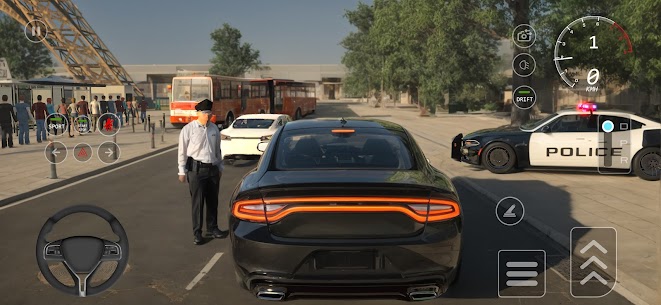
Traffic rule compliance is the central skill this game measures. Players must stop at every stop sign, yield to pedestrians, cyclists, and electric scooters, and keep to posted speed limits throughout each level. The game tracks every infraction. Break enough rules and a police officer pulls you over and issues a fine.
That fine costs coins. So breaking the rules is not just a failure state — it directly drains the currency players need for car unlocks and upgrades. Therefore, every intersection becomes a real decision point. The consequence is immediate and financial, which makes traffic sign awareness feel much more important than in typical arcade-style mobile racers.
City and Off-Road Tracks — Setting and Tone
The game splits its environments between urban city streets and off-road terrain. City tracks feature traffic lights, pedestrian crossings, and tight lane structures. Off-road sections add unpaved surfaces, wider hazard zones, and different vehicle handling demands.
The tone stays realistic throughout. The physics engine models braking distance, steering weight, and traction changes across road surfaces. Players who approach this title expecting an arcade racer will find the slower, more deliberate driving school mode requires a completely different mindset. However, that realism is exactly what separates this simulator from lighter mobile competitors.
How It Compares to Other Mobile Driving Sims
Several strong competitors exist in this genre on Android. Driving School Sim by Ovidiu Pop takes a similar educational approach but lacks the real-time police fine mechanic. School Driving 3D focuses more on parking missions and offers less variety in hazard types. Car Driving School Simulator and Real Driving Sim both emphasise open-world freedom over structured lessons.
Car Driving 2026 School Game sits between those two camps. It offers structured career mode progression alongside an open-road feel. The combination of the fine system, weather conditions, and the animal and rock hazards creates a challenge layer those competitors do not replicate. Additionally, the multiplayer racing mode gives it social replay value most driving school simulators skip entirely.
Core Gameplay Mechanics and Controls
Controls follow a standard mobile driving layout — steering wheel or tilt controls, brake and accelerator pedals, and a gear indicator for manual transmission players. The physics engine responds differently depending on vehicle weight and tyre grip. Because of that, switching cars mid-progression requires a brief adjustment period.
The game offers both automatic and manual transmission options. Manual mode adds a skill layer that rewards experienced sim fans. However, new players should start on automatic and focus entirely on traffic sign compliance before taking on the additional complexity of gear management.
Driving School Mode Lessons and Structure
Driving school mode runs as a structured career with individual lessons tied to specific skills. Early lessons focus on basic movement and traffic sign recognition. Later stages introduce parallel parking, hill starts, lane changes, and night driving sequences. Each lesson scores the player on a pass or fail basis based on rule compliance.
Completing lessons earns coins and progresses the driving license tier. The license system acts as the main progression gate. Players need a certain license level to unlock multiplayer access, so driving school mode is not optional — it is the foundation for everything else in the game.
The Traffic Fine and Police Enforcement System
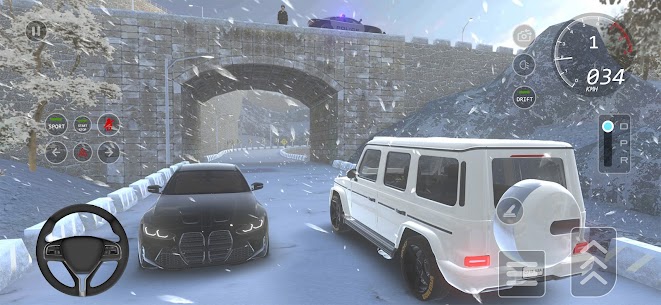
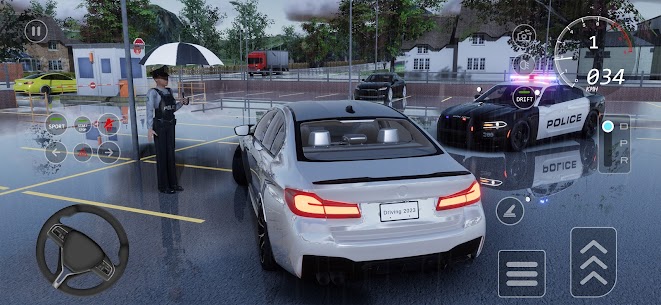
The fine system triggers whenever a player commits a traffic violation. Running a red light, ignoring a stop sign, failing to yield to a pedestrian — all of these produce a pull-over event. A police officer appears, and the fine comes directly out of the coin balance.
Fines compound quickly across a level. A single careless run can erase the coins earned from completing that stage. So the game creates a loop where breaking the rules to go faster actually slows down progression. That design forces players to internalise road safety habits rather than treating traffic signs as background decoration.
What Happens After Completing a Driving Level
Completing a level without violations earns the maximum coin reward and advances the driving license tier. Players also unlock access to harder stages with more complex hazard combinations. As a result, clean completion pays far better than sloppy completion.
After enough career mode levels, the multiplayer mode unlocks. This milestone is the main reward for consistent compliance throughout the driving school structure. Players who reach it have effectively demonstrated all the core skills the simulator teaches.
Hazard Challenges — Weather, Animals, and Falling Rocks
Beyond traffic rules, the game introduces a separate layer of unpredictable hazards. These appear progressively as career mode advances. Weather conditions hit early in the mid-game, followed by wild animal crossings and falling rock sequences in later stages.
These hazards do not replace traffic rule enforcement — they stack on top of it. Players must manage their speed, maintain safe stopping distance, and still comply with every road sign while reacting to a sudden animal crossing. However, the game does warn players that hazard stages are incoming, so there is time to adjust vehicle selection and approach.
Dynamic Weather and How It Changes Handling
Rain, fog, and bright sunlight conditions each affect the physics engine differently. Rain reduces traction, which increases braking distance and makes sharp turns riskier. Fog reduces visibility, forcing lower speeds to spot upcoming traffic signs in time.
The transmission choice becomes especially relevant here. Manual transmission players have more control over speed management in wet conditions, but the added complexity creates more opportunities for error. Therefore, many players switch to automatic for heavy weather stages until they have strong control fundamentals in place.
Wild Animal and Falling Rock Obstacles
Wild animal crossings appear without warning. Players must slow down or stop entirely until the animal clears the road. Hitting an animal counts as a violation and triggers a fine, because the game treats it as reckless driving. Similarly, falling rocks require players to swerve safely without crossing lane boundaries.
Both hazard types test a specific skill set — reading the road ahead at speed. Players who drive smoothly and maintain consistent speed buffers handle these stages far better than those who drive at maximum speed between obstacles. The game rewards margin-keeping, not aggressive pace.
How Hazard Layers Affect Your Fine Risk
Hazard stages combine traffic rule compliance demands with the new obstacle types. That combination creates the highest fine risk in the game. A player focused on avoiding a falling rock may miss a pedestrian crossing signal. However, the layout of hazard stages typically gives brief safe zones between challenges where players can reset their attention.
Experienced players learn to identify those safe zones and use them deliberately. The pattern recognition developed through driving school mode early lessons transfers directly to reading these more complex stages.
Multiplayer Mode and Real-Time Racing
Multiplayer mode opens after sufficient career mode progression. It supports real-time racing against other players. Additionally, players can enter joint driving school sessions where multiple participants complete educational stages together. That second mode is unusual among mobile driving simulators and gives the game a collaborative dimension most competitors lack.
The multiplayer racing mode runs across the same city and off-road environments used in career mode. However, competitors add pressure that traffic-only stages do not. Players who have internalised clean driving habits from career mode carry a real advantage, because breaking rules in multiplayer still costs coins.
Competing Against Friends and Family in Real Time
The game allows direct challenges between known contacts. Players can invite friends or family members into real-time races. The race structure follows standard mobile racing format — first to finish wins — but traffic compliance violations create speed penalties or fine deductions that affect the final outcome.
That mechanic makes multiplayer more strategic than a pure speed contest. A faster player who runs two red lights may lose to a slower player who completes the course cleanly. It reinforces the driving school mode values directly inside the competitive mode.
Joining Shared Driving School Sessions
Shared driving school sessions let multiple players complete the same lesson stage simultaneously. Players can observe each other’s runs in real time. Mistakes made by one participant appear on screen, which creates a genuine learning dynamic. However, each player is scored individually — there is no team score mechanic.
This mode works particularly well for younger players or groups that want a structured learning experience with a social element. The joint session format is one of the clearest educational design choices in the game.
Leaderboards and What Rankings Unlock
Global leaderboards track player performance across both career mode and multiplayer races. Climbing the leaderboard earns recognition but also drives the motivation loop that keeps career mode compelling long after the basic license tiers are complete.
Higher rankings unlock cosmetic rewards and confirm access to the full vehicle roster for active players. The leaderboard structure also makes personal bests meaningful, because position changes are visible and persistent.
Vehicles, Coins, Cash, and Car Unlocks
The vehicle roster spans over 40 cars across multiple categories. Muscle cars, SUVs, and trucks each handle differently because the physics engine models weight, centre of gravity, and tyre contact separately for each body type. That variety is not cosmetic — it directly affects which stages are easier with which vehicle.
The currency system uses two types: coins earned through gameplay and cash purchased as in-app purchases. Coins cover most day-to-day unlocks and basic vehicle acquisitions. Cash accelerates premium unlocks and provides shortcuts. However, nothing in the core progression is locked exclusively behind cash, which keeps the freemium balance reasonable.
The 40-Plus Car Roster and Handling Differences
Light cars like compact hatchbacks respond quickly and are easy to manage in tight city lanes. Muscle cars carry more speed but require more braking distance — which increases fine risk in high-density traffic sections. SUVs and trucks handle off-road terrain more predictably but feel sluggish in sharp urban corners.
Choosing the right vehicle for a specific stage type is therefore a real decision. Players who default to their fastest car for every stage will accumulate more fines in technical city layouts than those who match vehicle to environment.
How the Coins and Cash Currency System Works
Coins flow into the balance through clean level completions. The cleaner the run, the more coins the player earns. Fines directly subtract from this balance. Cash is separate — it is bought through in-app purchases (125,000 coins for $1.99 or 250 Cash for $2.49 on iOS). Cash buys premium vehicles or bulk coin top-ups.
Players who maintain a clean fine record throughout career mode will accumulate enough coins to unlock most of the vehicle roster without purchasing anything. The system rewards the same behaviour the game is designed to teach, which creates a positive gameplay loop.
What Players Unlock Through Earning vs Spending
Earning through gameplay unlocks driving licenses, career mode vehicles, and multiplayer access. Spending cash unlocks premium vehicles faster, provides additional customisation options through the tuning system, and removes the grind from mid-tier car acquisitions.
Most gameplay milestones — including multiplayer access and the driving license tiers — sit firmly in the earn column. The spend column accelerates the experience for players who want the full car roster immediately. However, neither path blocks the core educational content of the driving school mode.
Hidden Mechanics and Common Mistakes New Players Miss
Several mechanics receive little explanation at the start of the game. The fine system feels obvious once it triggers, but new players often do not realise that near-misses with pedestrians count as violations even if no collision occurs. The game tracks proximity to vulnerable road users, not just actual contact.
Similarly, many players miss that the tuning system affects handling characteristics permanently. Modifying suspension or tyre settings changes how a vehicle responds throughout career mode — not just in the stage where it was customised.
Why Yielding to Pedestrians and Cyclists Matters Most
Pedestrians and cyclists produce the highest fine frequency among new players. The reason is timing — player attention is often fixed on the road ahead while a pedestrian crossing activates slightly to one side. Additionally, electric scooter users are smaller on screen and easier to miss at speed.
The fix is simple but requires habit formation. Players should reduce speed approaching any intersection, not just those with visible traffic lights. That buffer gives enough time to spot yielding requirements before they trigger a violation.
How Traffic Signs Compound Fine Risk Across Levels
Traffic signs do not reset between checkpoints in a single level. Each violation is tracked cumulatively. So a player who picks up two small fines early in a stage has already reduced their coin reward before reaching the harder second half.
Experienced players approach each stage as a single unit, aiming for zero violations across the full run rather than recovering from early mistakes. The compounding structure means early clean driving is more valuable than a strong finish after a messy start.
The Tuning System and Vehicle Customisation Options
The tuning system lets players adjust visual appearance and performance characteristics. Aesthetic options include paint colours and cosmetic modifications. Performance tuning covers suspension settings, tyre type, and engine parameters.
Performance tuning has practical consequences. Softer suspension improves comfort on off-road tracks but reduces responsiveness on tight city corners. Players who tune aggressively for one environment may notice handling problems in mixed-terrain stages. Therefore, testing tuning changes in free drive mode before applying them to career stages is worth the extra time.
Best Car Driving 2026 School Game Tips and Tricks for Beginners
Progressing efficiently in this driving simulator comes down to three things — understanding the fine system, choosing vehicles strategically, and knowing where most career mode failures actually happen.
How to Keep Coins by Avoiding the Police Fine System
Every fine removes coins. The most effective way to protect the coin balance is to treat the police fine trigger as a hard stop condition rather than an inconvenience. Replay early career stages after a fine to rebuild the balance before advancing to harder levels. Those early stages are shorter and pay clean-run bonuses quickly.
Also, the pedestrian yield requirement triggers fines more than any other rule type for new players. Making a habit of slowing at every unmarked intersection — not just traffic-light controlled ones — eliminates most of those early fine events.
Which Cars to Unlock First Based on Handling Characteristics
The vehicle roster rewards players who match car to track type. For city-heavy early career stages, compact vehicles with tight turning radius are more effective than muscle cars. Unlock one reliable city car first, then save coins for an SUV that handles both off-road and city stages acceptably. That two-vehicle approach covers most of career mode without needing specialised track-specific cars.
Muscle cars look appealing early, but their braking distance makes them expensive in fine terms on city stages. Save them for later open-road and highway sections where their speed advantage pays off.
The Most Common Level-Fail Point in Driving School Mode
Most driving school mode failures happen at complex intersections with overlapping rules — a stop sign, a pedestrian crossing, and a cyclist lane all active at the same time. The game introduces these in mid-career stages without much warning.
The solution is to approach those intersections at reduced speed well in advance — not at the intersection itself. Players who brake early give themselves time to read all three rule conditions before reaching the compliance zone. Players who arrive at full speed consistently fail these stages on the first two or three attempts.
Frequently Asked Questions About Car Driving 2026 School Game
Is Car Driving 2026 School Game available on Android and iOS?
Yes, Car Driving 2026 School Game is available on both Android and iOS. On Android it is published by Insane Car Games via Google Play. On iOS the developer is listed as Pocket Apex Studio. Both versions are free to download with optional in-app purchases for coins and cash.
Does Car Driving 2026 School Game have a multiplayer mode?
Yes. Multiplayer mode supports real-time racing against other players and shared driving school sessions. Players can race friends and family directly or join others in joint lessons. Multiplayer access unlocks after completing enough career mode levels in the driving school progression.
Can players customise their cars in Car Driving 2026 School Game?
Yes. The tuning system lets players adjust both visual appearance and performance settings. Options include paint and cosmetic modifications alongside suspension, tyre, and engine tuning. Performance tuning changes how each vehicle handles across different track types throughout career mode.
Who Should Play Car Driving 2026 School Game
Car Driving 2026 School Game is the right choice for two distinct types of mobile player. First, it suits anyone who wants a driving simulator with real educational depth — one that teaches road safety through consequence rather than through instruction screens. The fine system does exactly that.
Second, it suits players who enjoy structured career progression combined with competitive multiplayer access as a reward. The leaderboard system, shared driving school sessions, and the 40-plus vehicle roster with genuine handling differences give long-term players plenty of reasons to stay.
Having worked through the driving school mode personally, I found the traffic compliance system to be genuinely effective at changing how I approached each stage — and that is rare for a free mobile simulator. The hazard challenge layers — particularly the wild animal crossings — add meaningful unpredictability without breaking the realism the physics engine builds throughout. If you want a mobile driving simulator that actually makes you think about road safety, this title delivers that in a way most competitors do not.
Images

Related apps

Latest Games
Popular Games


