
Draw Rider 2 Plus
| Developer | 17Studio LLC |
| Updated | Apr 18, 2026 |
| Size | 70 MB |
| Version | 3.1.3 |
| Requirements | 6.0 and up |
| Get it on |  |
Description
The advanced blood simulation and happy bike physics create unpredictable challenges during every single race. Returning mobile gamers will find these strategies essential for clearing difficult user-created stages without shattering into pieces. This post covers core riding mechanics, level editor functions, and survival tactics of Draw Rider 2 Plus for the toughest obstacle traps.
What Makes Draw Rider 2 Plus Unique
The game delivers a brutal yet hilarious physics experience disguised as a simple racing title. Players navigate incredibly dangerous environments using nothing but a fragile bicycle. Consequently, every small mistake results in massive consequences for the rider. The title balances intense difficulty with rewarding progression systems.
Additionally, the premium nature of this specific version removes all advertising interruptions. Therefore, players focus entirely on completing stages and setting new speed records. The developers provide all tools immediately, giving everyone access to the complete creative suite. This access fundamentally changes how the community interacts with the content.
Furthermore, the overall presentation remains clean despite the chaotic gameplay. The clean visuals contrast sharply with the gruesome outcomes of failed jumps. As a result, the visual feedback clearly tells players exactly what went wrong during a run. This immediate feedback loop keeps players engaged for hours.
Vector Graphics And Blood Simulation
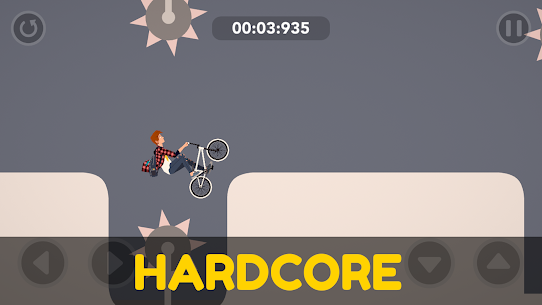
The visual style relies on crisp 3D vector graphics to outline the environment clearly. These sharp lines ensure players easily identify safe paths and deadly hazards. However, the clean aesthetic quickly changes once a mistake occurs. The game features an advanced blood simulation system that reacts dynamically to impacts.
When a character hits an obstacle, gore realistically remains painted on the walls and floors. This permanent environmental marking serves as a grim reminder of previous failed attempts. Consequently, players can visually track their common error points on difficult stages. This clever design turns gruesome failures into useful visual data for the next attempt.
The Story Of Max And Emily
The narrative follows the unexpected journey of Max and Emily through a treacherous landscape. Their adventure begins as a seemingly ordinary bicycle ride before escalating into chaos. However, the environment quickly introduces deadly obstacles that test their survival skills. Players must guide these characters safely to the finish line despite the overwhelming odds.
Throughout the story mode, you experience professional character dubbing provided by Domenick DeFrank. His vocal performance adds a layer of humor and personality to the brutal physics engine. As a result, players feel more connected to the protagonists as they endure countless crashes. The voice acting significantly elevates the overall narrative experience.
Draw Rider 2 Plus Vs Happy Wheels Mobile
When evaluating the mobile physics genre, this title frequently draws comparisons to Happy Wheels Mobile. Both games emphasize extreme physics, fragile characters, and deadly environmental traps. However, this premium release focuses much more heavily on tight bicycle control rather than vehicular variety. The vector graphics also provide a much cleaner aesthetic compared to its rival.
Additionally, the built-in level editor in this title feels significantly more optimized for touch screens. Therefore, creating smooth ramps and precise trap placements takes much less effort. By contrast, Happy Wheels Mobile often requires more tedious adjustments when building custom stages. Ultimately, players seeking precision bicycle mechanics will prefer this cleaner vector approach.
How Bike Physics And Controls Operate
Understanding the underlying engine mechanics remains absolutely critical for finishing stages. The game utilizes a highly sensitive physics system that reacts to every input. Consequently, leaning too far forward or backward often results in immediate failure. Players must constantly adjust their balance while maintaining forward momentum.
Furthermore, the environments feature varying terrain types that affect traction differently. Smooth ramps provide excellent speed, while jagged rocks throw the bicycle off balance instantly. Therefore, anticipating the upcoming surface changes allows riders to adjust their posture proactively. Mastering this subtle balance acts as the primary skill check for the entire experience.
Additionally, gravity impacts the rider drastically during massive drops. Falling from great heights compresses the suspension and stresses the vehicle frame. As a result, landing at the wrong angle almost guarantees a fatal crash. Managing mid-air rotation determines whether you survive or shatter into pieces upon impact.
Managing The Happy Bike Physics System
The core gameplay revolves around the infamous happy bike physics engine. This system intentionally makes the vehicle incredibly fragile and prone to spectacular disassembly. For example, landing too heavily directly on the front tire often snaps the forks. Therefore, players must ensure both tires touch the ground simultaneously whenever possible.
When navigating rough terrain, you must feather the acceleration rather than holding it down constantly. Holding full throttle on uneven ground causes the front wheel to lift dangerously high. Consequently, the rider flips backward and hits the ground headfirst. Gentle throttle control keeps the vehicle stable and prevents unwanted wheelies.
Walking Character Physics After Dismounting
Sometimes the bicycle sustains too much damage and becomes completely unrideable. However, the game implements unique walking character physics that allow the rider to continue on foot. Moving without the vehicle feels significantly different and requires a completely new approach. The character walks with a heavy, unstable gait that makes jumping difficult.
During these on-foot segments, players must carefully time their leaps over smaller gaps. Without the speed of the bicycle, clearing large pits becomes physically impossible. Therefore, transitioning to walking only works if the finish line sits relatively close by. Surviving on foot requires extreme patience and perfect timing.
Surviving When Wheels Fall Off
A major feature of the physics engine involves the wheels physically detaching from the frame. Hitting a wall too hard frequently results in losing the front tire completely. However, losing a wheel does not immediately trigger a game over screen. Players can actually balance the remaining frame and continue sliding forward.
To survive a missing wheel, you must instantly shift the rider’s weight backward. This action lifts the broken front section off the ground and reduces friction. Consequently, the remaining back wheel can still provide forward momentum if balanced perfectly. This desperation tactic often saves runs that seem completely doomed.
What The Level Editor Allows Players To Build
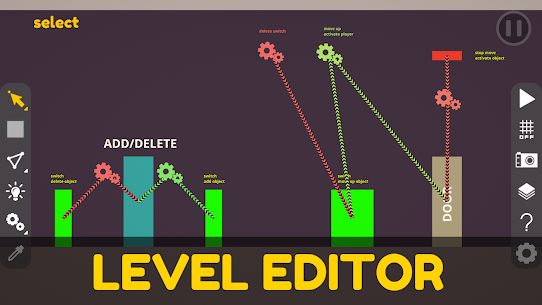
The robust creation suite represents the strongest feature of this premium release. The built-in level editor provides every single tool needed to construct elaborate stages. Because this is the Plus edition, players immediately access all objects without waiting. Therefore, you can start building massive architectural nightmares right away.
Additionally, the interface feels intuitive and responsive for mobile content creators. You draw lines directly onto the screen to form the solid ground and ramps. Next, you drag and drop various environmental hazards exactly where you want them. This streamlined process makes stage design incredibly fast and enjoyable.
Furthermore, the toolset includes dynamic elements that interact with the rider physics. Placing swinging hazards or rolling objects adds necessary timing challenges to the tracks. As a result, creators can design puzzles that require both speed and precision. The sheer variety of available tools ensures infinite replayability for the community.
Using Spikes Saws And Pits Effectively
When designing custom tracks, hazard placement determines the overall quality of the experience. Spikes serve as excellent static punishments for players who jump too early or too late. By placing spikes underneath a narrow ramp, creators force riders to maintain perfect balance. Therefore, static traps test precision rather than speed.
Conversely, spinning saws introduce dynamic timing elements into the stage layout. Placing multiple saws in a row forces the player to manage their momentum carefully. If they ride too fast, they crash directly into the moving blades. Consequently, blending static pits with moving saws creates the most engaging and memorable challenges.
Drawing Unique Tracks For Online Mode
The line-drawing tool forms the absolute foundation of any good custom stage. Instead of snapping pre-made blocks together, you physically trace the path with your finger. This mechanic allows for incredibly smooth loops and organic terrain shapes. However, drawing lines too sharply creates bumps that will destroy the fragile bicycle.
To create popular stages, creators must ensure their lines flow naturally into one another. Testing the track constantly during the building process prevents impossible jumps from ruining the flow. Additionally, providing clear visual cues before massive drops helps players anticipate the danger. Fair but difficult tracks always perform best within the community ratings.
Competing And Setting Records Globally
After finalizing a custom track, players upload their creations to the global database. This online ecosystem thrives on constant competition and record-setting attempts. Whenever you upload a stage, other users immediately attempt to beat your par time. As a result, the community constantly pushes the boundaries of the physics engine.
When playing other user levels, the goal shifts from mere survival to absolute optimization. Shaving milliseconds off a run requires cutting corners and taking massive risks. Therefore, studying the world record ghosts helps you understand advanced movement techniques. Competing globally provides endless motivation long after finishing the official content.
How Progression And Customization Work
The core loop relies on a satisfying progression model that rewards persistent effort. Beating stages naturally pushes players toward more difficult and complex environments. However, the game never arbitrarily locks content behind unnecessary waiting periods. Instead, progression feels tied directly to mechanical skill and execution.
Additionally, completing specific objectives yields cosmetic rewards that personalize the experience. Players enjoy standing out when competing on the global leaderboards. Therefore, earning rare items provides a strong incentive to master the hardest stages. The reward system constantly validates the player’s time investment.
Furthermore, the premium version grants automatic access to the most vital creation components. Players do not need to grind for basic building blocks. Consequently, the focus remains entirely on skill expression and creativity. This generous approach respects the user’s time and encourages experimentation.
Completing Challenge Mode Tracks
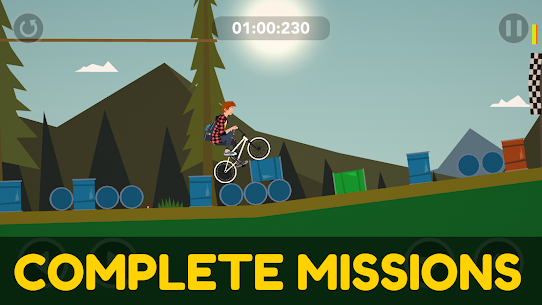
The challenge mode contains exactly 32 unique and carefully designed levels. These stages act as the ultimate test of your physics mastery and reflex speed. Each level introduces new hazard combinations that require different tactical approaches. Therefore, studying the layout before accelerating often prevents immediate and gruesome deaths.
To progress through this mode, players must accept failure as a teaching tool. Every time the character realistically shatters into pieces, you gain knowledge about the trap timing. Consequently, muscle memory eventually takes over, allowing you to breeze through previously impossible sections. Beating the final challenge stages provides immense personal satisfaction.
Unlocking New Skins For Max And Emily
Cosmetic customization heavily drives the replay value for dedicated players. As you conquer difficult tracks, you earn the right to change character appearances. These skins range from simple color swaps to entirely different outfits for Max and Emily. Therefore, completing the hardest content directly translates into visual prestige.
Because this edition unlocks all customization items intrinsically, you simply need to achieve the required milestones. You do not worry about external currency or arbitrary storefronts. Consequently, equipping a rare skin proves to other players that you actually survived the brutal campaign. These visual rewards make the grueling challenges feel worthwhile.
Accessing All Plus Version Tools
Owning the Plus edition significantly alters the initial progression experience. Instead of slowly acquiring editor components, you possess the entire suite immediately. This means your very first custom track can feature every single hazard and trap type. As a result, new creators can build complex machinery without any artificial restrictions.
This unrestricted access fundamentally improves the pacing of the game. You transition seamlessly between playing difficult campaign stages and building your own. Therefore, when you get frustrated with a story level, you simply switch to the editor to relax. Having all tools available ensures the gameplay loop never feels stagnant.
Why Players Fail Common Obstacle Traps
Despite understanding the controls, many riders consistently die to the exact same hazards. The physics engine punishes hesitation just as harshly as it punishes recklessness. Consequently, finding the perfect middle ground remains the hardest skill to acquire. Analyzing these common failure points helps players adjust their fundamental strategies.
Additionally, visual panic often leads to poor decision making mid-flight. When players see a massive pit approaching, they instinctively pull back too hard on the controls. This overcorrection almost always causes the back wheel to slip out entirely. Therefore, remaining calm during high-stress jumps prevents unnecessary wipes.
Furthermore, many users completely misunderstand how momentum interacts with rotating hazards. They treat moving traps like static walls and crash directly into them. As a result, they fail to adjust their speed to match the hazard’s rhythm. Recognizing these specific errors dramatically improves overall survival rates.
Mistiming Jumps Over Pits And Balls
Large pits represent the most fundamental threat in any physics racer. Players frequently fail these jumps by accelerating too late on the ramp. If you do not build enough speed before the incline, gravity pulls you straight down. Therefore, you must commit to full acceleration long before the jump actually appears.
Rolling balls introduce an entirely different physics problem for the rider. These massive objects crush the bicycle instantly upon contact. Many players try to race ahead of the balls, which usually results in getting flattened. Instead, braking hard and letting the object pass safely often proves the superior tactic.
Failing To Maintain Momentum On Saws
Spinning saws demand a completely counter-intuitive approach from the player. When approaching a row of blades, instinct tells you to slow down carefully. However, slowing down increases the amount of time you spend in the danger zone. Consequently, hesitating around saws usually guarantees a gruesome character death.
To survive dense saw traps, you must maintain a consistent, moderate speed. You cannot stop, but you also cannot sprint recklessly forward. Therefore, finding the exact rhythm of the spinning blades allows you to glide right through them. Mastering this specific momentum management separates amateur players from global record holders.
Misunderstanding Walking Character Physics
When forced to abandon the vehicle, many players attempt to move exactly like they were riding. They hold the forward button constantly, expecting smooth and continuous motion. However, the walking mechanics require deliberate, rhythmic inputs to maintain balance. As a result, rushing on foot inevitably causes the character to trip and fall fatally.
To succeed while walking, you must take slow, measured steps toward the objective. If you encounter a small gap, you must stop completely before attempting the leap. Therefore, patience becomes your primary weapon when the bicycle breaks down. Rushing the walking segments remains the single biggest mistake new players make.
Best Draw Rider 2 Plus Tips For Challenge Mode
Surviving the hardest content requires more than just basic control familiarity. You must implement specific techniques designed exclusively for this title’s unique physics parameters. Applying these tactics consistently will drastically reduce your overall death count. Consequently, you will clear stages faster and with much less frustration.
Additionally, prioritizing vehicle preservation over raw speed always yields better results. A broken frame cannot complete a jump, no matter how fast it travels. Therefore, keeping the machine intact serves as your primary objective during every run. Speed naturally follows once you stop crashing into every single obstacle.
Furthermore, utilizing the visual feedback loop helps correct bad habits quickly. Pay close attention to exactly which part of the bicycle breaks first upon impact. As a result, you can adjust your landing angle specifically to protect that weak point. This analytical approach turns impossible stages into manageable puzzles.
Keeping Wheels Attached During Steep Drops
Massive vertical drops destroy more runs than any other environmental feature. When falling from a great height, players often let the vehicle rotate randomly in the air. This guarantees an impact angle that will snap the axles instantly. Therefore, you must actively manage your rotation during every single second of freefall.
To prevent the wheels from detaching, always aim to land slightly on the back tire first. This rear-wheel bias allows the suspension to absorb the majority of the kinetic energy. Consequently, the front tire drops down gently afterward, preserving the fragile fork assembly. Mastering this landing technique remains absolutely essential for challenge mode survival.
Earning Customization Items Efficiently
While the premium version unlocks the systems, you still must perform well to earn the skins. Focusing entirely on speed records often results in countless restarts and slow progression. Instead, focus on simply finishing the tracks safely during your first dozen attempts. Therefore, you secure the completion markers needed to access new character outfits quickly.
Additionally, playing highly-rated online community stages often grants rapid progression milestones. Many creators design tracks specifically meant to be fun rather than punishing. As a result, clearing these easier community levels boosts your completion stats rapidly. This efficient method ensures you dress Max and Emily in rare gear much faster.
Avoiding Character Shattering In Story Mode
The narrative campaign features sudden traps that trigger without any prior warning. When the environment shifts unexpectedly, players usually tense up and crash hard. This heavy impact causes the character to realistically shatter into pieces, ending the narrative sequence. Therefore, maintaining a moderate, cautious speed during unknown story segments prevents surprise deaths.
If you suspect a trap lies ahead, tap the brakes rather than holding them. Hard braking throws the rider over the handlebars directly into the hazard. Consequently, feathering the brakes keeps the weight centered while reducing speed. This cautious driving style guarantees you experience the entire story without constant gruesome interruptions.
What The Online Community Offers Today
The lifeblood of this arcade racer lies entirely within its active user base. Long after you finish the 32 official stages, the online mode provides infinite content. The community constantly uploads wild, experimental tracks that test the physics engine in new ways. Therefore, engaging with this ecosystem effectively makes the title infinitely replayable.
Additionally, the rating system ensures that low-quality or impossible tracks sink to the bottom. Players act as curators, highlighting the most creative and engaging designs. As a result, you rarely waste time playing poorly constructed environments. The built-in sorting tools easily connect you with the highest quality community content available.
Furthermore, interacting with other creators often inspires your own track designs. Seeing how a veteran builder utilizes a spike pit might give you a brilliant idea. Consequently, the online mode acts as a massive interactive classroom for the level editor. Participating in this creative exchange dramatically enhances the overall value of the game.
Rating Custom User Tracks
Leaving accurate feedback on community stages remains crucial for maintaining quality. When you encounter a track that uses vector graphics beautifully, give it a high rating. This positive reinforcement encourages the creator to build more excellent content. Therefore, your ratings directly influence the type of tracks that dominate the popular tab.
Conversely, if a track relies on unfair, invisible traps, you should rate it poorly. Frustrating designs that rely on pure luck rather than skill ruin the online experience. As a result, downvoting bad architecture protects other players from wasting their time. Active curation by the player base keeps the online ecosystem healthy and fun.
Beating Global Speed Records
The ultimate endgame involves hunting down world records on popular community stages. Achieving a top time requires absolute perfection regarding momentum and trajectory. You must analyze every single bump in the terrain to maximize your acceleration. Therefore, speedrunning transforms the game from a survival experience into a precision racing simulator.
To capture these records, you must frequently abandon the safe strategies used in campaign mode. You will intentionally risk shattering into pieces just to save a fraction of a second. Consequently, record hunting requires immense patience and hundreds of rapid restarts. Seeing your name at the top of a global leaderboard provides the ultimate bragging rights.
Frequently Asked Questions About Draw Rider 2 Plus
Is Draw Rider 2 Plus free to download?
No, this specific Plus version represents the premium, paid release of the game. Because it is a paid title, it completely removes all advertisements and immediately grants players full access to all level editor tools and customization items without artificial waiting periods.
Does Draw Rider 2 Plus require an internet connection?
You can play the main Story Mode, the Challenge Mode, and use the built-in level editor completely offline. However, if you want to download custom community tracks, set global speed records, or upload your own stages, you must connect to the internet.
How many official levels are in Draw Rider 2 Plus?
The game features exactly 32 official developer-created levels split across the main history and challenge modes. Once you complete these difficult baseline stages, you gain access to an infinite number of user-generated levels through the online community portal.
Why You Should Try This Arcade Racer
This physics title excels at delivering highly rewarding gameplay wrapped in a deceptively simple visual package. It is perfectly suited for creative gamers who love testing their patience against brutal environmental puzzles. The inclusion of the unrestricted editor tool elevates it far above standard mobile titles. Having personally lost countless wheels to those spinning saw traps, I can confidently say the responsive controls make every failure feel completely fair. You should absolutely install this game if you want a premium, ad-free experience that genuinely respects your mechanical skill.
Images






Latest Games
Popular Games


